Tuesday, October 31, 2023

October 2023: Gothic Fiction or Horror

Getting into the Halloween spirit at the beginning of the month, the topic for the October 2023 meeting was Gothic Fiction or Horror.  Beyond classic Gothic fiction, collectors were encouraged to include other sub-genres, including Modern, Southern, and Urban Gothic.  One collector presented a pre-Gothic work to show its influence on a classic Gothic novel, Frankenstein, while another collector presented Shelley's story itself.  Beyond the fictional works, one collector also shared a nonfiction book on horror and Gothic tales, which touched on many of the fictional works shown during the meeting.


Pre-Gothic Influence

Paradise Lost

Milton, John.  Paradise Lost.  New York: Pollard & Moss, 1887.  With Fifty Full-Page Illustrations by Gustave DorĂ©.  First published in 1667, Milton's epic poem predates the Gothic genre by a century, but the aesthetic and elements of the genre are abundant in the work.  Mary Shelley was strongly influenced by Paradise Lost, and it appears in multiple ways throughout Frankenstein.  Victor Frankenstein and the monster both quote Milton.  Frankenstein’s name, Victor, is derived from Milton's references to God as "the victor," and the monster refers to himself as the fallen angel, a term Milton uses for Satan.  Shelley writes that the monster reads Paradise Lost in the novel.  [See Mary Shelley's Frankenstein below.]


Classic Gothic Fiction

The Castle of Otranto

Walpole, Horace.  The Castle of Otranto.  London: The Folio Society, 1976.  Introduction by Devendra P. Varma.  Lithographs by Charles Keeping.  First published in 1764, The Castle of Otranto is generally regarded as the first Gothic novel, inspiring a new literary genre popular throughout the late 18th and early 19th centuries.  The medieval aesthetic established by Walpole not only shaped the Gothic stories of his contemporaries and the next generation of writers such as Ann Radcliffe, Matthew Lewis, Edgar Allan Poe, Mary Shelley, and Bram Stoker—all shown below—but also continues to shape Gothic literature today.


The Mysteries of Udolpho

Radcliffe, Ann.  The Mysteries of Udolpho.  London: J.M. Dent, 1962.  In 2 volumes.  The Mysteries of Udolpho was first published in 1794 in four volumes and is regarded as the archetype of the Gothic novel.  Its elements of physical and psychological terror, questionably supernatural events, and a scheming villain and persecuted heroine are closely imitated by other Gothic writers.  Radcliffe's characters and the story itself is alluded to, if not directly quoted, by other writers such as Poe in "The Oval Portrait" and Henry James in The Turning of the Screw (see below).  Non-Gothic writers such as Jane Austen, Walter Scott, Anthony Trollope, and Herman Melville also reference Radcliffe and her story in their works.


The Monk

Lewis, Matthew.  The Monk.  New York: Oxford University Press, 2002.  Introduction by Stephen King.  The Monk: A Romance was first published in 1796 in three volumes.  It was published anonymously, listing the author only as "M. L."  The book reviewed well, and subsequent editions were published under Lewis’s full name.  The novel drew praise both for Lewis's attention to the horror aspect of the novel and its convoluted plot.  These two elements helped grow the genre and made it one of the most important Gothic novels of the time.

Lewis, Matthew.  The Monk.  New York: Evergreen / Grove Press, 1959.  Introduction by John Berryman.  One of the plot lines of the book traces the corruption and downfall of Ambrosio, the monk.  The scandalous plot caused some controversy at the time, triggering considerable distress within Lewis's family.  Lewis attempted to make reparation with his family by revising the work and expurgating "every syllable which could be grounded the slightest construction of immorality," he wrote to his father in a letter in advance of the fourth edition, revised, published in 1798.  This copy is a reprint of the first unexpurgated American edition, returning to the original text of the third edition.  [Photographed below with Stevenson’s Dr Jekyll and Mr Hyde.]


Frankenstein; or, The Modern Prometheus

Shelley, Mary W.  Frankenstein; or, The Modern Prometheus.  Philadelphia: Carey, Lea & Blanchard, 1833.  In 2 volumes.  Frankenstein; or, The Modern Prometheus was first published anonymously in 1818, in three volumes, with a preface by Percy Bysshe Shelley.  The second edition, published in 1823, credited Mary Shelley as the author and divided the publication into two volumes.  This 1833 American edition continued the 2-volume division of the second English edition even though a "popular" edition in one volume was released by a British publisher in 1831.  That edition was heavily edited by Shelley to make the story less radical and has become the more widely published edition today.  Some readers and scholars, however, prefer the original version of the story, claiming it preserves the spirit of the genesis of the story.  Mary wrote Frankenstein as her contribution to a competition among friends—Mary, her husband Percy, Lord Byron, and John Polidori—in 1816 to see who could write the best horror story.

Nota Bene: John Polidori's contribution to the horror story competition was "The Vampyre," a short story first published in 1819.  Polidori’s story was the first published modern vampire story and is considered the progenitor of the romantic vampire genre, influencing such works as Bram Stoker's Dracula, published in 1897 (see below).


Melmoth the Wanderer

Maturin, Charles.  Melmoth the Wanderer.  London: The Folio Society, 1993.  Melmoth the Wanderer was first published in 1820.  The plot leans heavily into the supernatural as the titular character sells his soul to the devil in exchange for an extended lifespan.  By highlighting the supernatural element of the Gothic genre, H. P. Lovecraft in Supernatural Horror in Literature professes Melmoth the Wanderer as "an enormous stride in the evolution of the horror-tale" (see below) and Devendra Varma in The Penguin Encyclopedia of Horror and the Supernatural describes it as "the crowning achievement of the Gothic Romance."


"The Fall of the House of Usher"

Poe, Edgar Allan.  "The Fall of the House of Usher."  Burton's Gentleman's Magazine, Volume V, July to December 1839.  Poe's short story was first published in Burton's Gentleman's Magazine in 1839 before being revised for inclusion in Tales of the Grotesque and Arabesque (1840).  In the introduction to a later collection of Poe stories, G. R. Thomson writes, "the tale has long been hailed as a masterpiece of Gothic horror."  The story develops themes of isolation, madness, and the metaphysical to craft its Gothic aesthetic.  The element of the physical deterioration and crumbling of the physical house in the story is an oft-repeated device in Gothic horror, harkening back to Walpole's The Castle of Otranto.


The Mystery of Edwin Drood

Dickens, Charles.  The Mystery of Edwin Drood.  London: Macmillan & Co., 1925.  The Mystery of Edwin Drood is Dickens's final, though unfinished, novel.  The book was scheduled to be published in twelve installments from April 1870 to February 1871, but Dickens died in June 1870 before completing the story.  Chapman & Hall published the six completed installments from April to September 1870.  In part because the novel is incomplete, Dickensian readers have debated whether Drood is a Gothic novel since the ending is unknown and the murderer and motive are not revealed.  Some of Dickens's other works, notably Oliver Twist and Bleak House, have been described as Gothic due to the descriptions of the slums of London, the sheer depravity of the poor, and the conditions in which they live; thus, these novels are often called "London Gothic," depicting the seedier side of the city.  London’s opium dens feature prominently in Drood, especially after Edwin's death when the other characters all migrate to London.  It is here, near the end of Dickens's completed installments, that London's darker side begins to emerge and moves the story to what by more modern classifications would be considered Urban Gothic.

 Dickens, Charles.  Edwin Drood and Reprinted Pieces.  London: Chapman & Hall Ltd., n.d. (c. 1891).  The "Daily News" Memorial Edition, with sixteen illustrations.  Contains The Mystery of Edwin Drood (1870) and the short story collection Reprinted Pieces (1861).


The Monk and Dr Jekyll and Mr Hyde

Stevenson, Robert Louis.  Dr Jekyll and Mr Hyde and Weir of Hermiston.  London: Folio Society, 2006.  Illustrated by Grahame Baker Smith.  Strange Case of Dr Jekyll and Mr Hyde was first published in 1886 and is considered a defining book of the Gothic horror genre for its interplay of the dualities of good versus evil and civility versus barbarism.  While many Gothic writers employ supernatural causes of evil, Stevenson draws on Freudian theories of the conscious and unconscious mind to explore the idea of the evil within oneself, an evil far more sinister and frightening than any external source.  This Folio Society edition is published together with Stevenson's unfinished novel, Weir of Hermiston.


The Uncensored Picture of Dorian Gray

Wilde, Oscar.  The Uncensored Picture of Dorian Gray.  Cambridge, MA: The Belknap Press of Harvard University Press, 2011.  The Picture of Dorian Gray was first published in Lippincott's Monthly Magazine in the July 1890 issue.  Without Wilde's knowledge, the story was heavily edited with a section of more than 500 words removed, fearing the story was indecent as originally submitted.  When it was first published in book form the following year, some of the deleted content was restored, but some material was still edited to tone down the homosexual content.  In this 2011 unexpurgated edition, The Picture of Dorian Gray finally appears for the first time as originally written by Wilde.  His only novel, Wilde's tale is hailed as a classic of late-Victorian Gothic literature.


Dracula

Stoker, Bram.  Dracula.  New York: Grosset & Dunlap, 1931.  Photoplay edition with illustrations from the Universal Picture produced by Carl Laemmle, Jr.  Dracula was first published in 1897.  Some contemporary critics reviewed the book positively noting its effective use of horror, but others critiqued it negatively for being excessively frightening.  With mixed reviews, the book was not an instant success and Stoker earned very little money from it during his lifetime.  The book surged in popularity after Universal Studios purchased the movie rights and released the 1931 film Dracula.  The film adaptation gave Dracula a second life (pun intended) and helped cement the novel as a classic of Gothic fiction.

Title page and frontispiece with studio still of
Bela Lugosi as Dracula and Helen Chandler as Mina

Nota Bene: When Stoker applied for copyright in the United States, he provided only one copy of the book instead of two to the Copyright Office of the Library of Congress.  Having not fully complied with US copyright law, Dracula prematurely fell into the public domain.  This error was not discovered until Universal Studios purchased the rights to adapt the story to film.  US publishers, therefore, were able to reprint the book without license.  Also, because the story—and, more importantly, the character Dracula—is in the public domain, countless Dracula movies have been made without securing rights, each renewing interest in the original story.  As a result, Dracula has never been out of print. 


Dracula by Bram Stoker

Wynne-Jones, Tim.  Dracula by Bram Stoker.  Toronto: Key Porter Books, 1997.  Illustrated by Laszlo Gal.  Dracula by Bram Stoker is a fully illustrated abridgement of the classic novel targeted to young readers.


The Turn of the Screw

James, Henry.  The Turn of the Screw, The Aspern Papers, and Seven Other Stories.  London: Collins, 1956.  With an introduction by Michael Swan.  The Turn of the Screw was originally published in 12 serial installments in Collier's Weekly from January to April 1898.  Later that year, it was published in book form in The Two Magics together with James's "Covering End."  James made many minor revisions to the text for inclusion in the 1908 New York Edition, a 24-volume collection of his works published and released between 1907 and 1909.  Early reviews of the 1898 publication quickly located The Turn of the Screw within the canon of Gothic fiction.  It was hailed as a brilliant ghost story and praised for its ability to frighten the reader.  Initial reviewers bought into the supernatural ghost story form, but later critics proffered the supernatural elements as figments of one character's imagination.  The question of real versus perceived supernatural events has been an ongoing tension of the Gothic genre since Radcliffe’s The Mysteries of Udolpho.


Modern Gothic Fiction

The Woman in Black: A Ghost Story

Hill, Susan.  The Woman in Black: A Ghost Story.  New York: David R. Godine, 1986.  First published in 1983, The Woman in Black is a Victorian-styled traditional ghost story about a mysterious specter which haunts a small Edwardian English town.  The book is acclaimed for the author's ability to create not simply a setting but an atmosphere for horror; and, though thrilling from the start, Hill is able to pace the suspense in what critics have called "controlled horror."


A Density of Souls

Rice, Christopher.  A Density of Souls.  New York: Hyperion, 2000.  A Density of Souls is the debut novel of Christopher Rice, the son of Anne Rice.  Seeking to distinguish his own writing from that of his mother's horror novels—as well as the horror novels of his aunt, Alice Borchardt—Christopher preferred to call his early works "supernatural thrillers."  The story is set in New Orleans—where Christopher was living and caring for his mother while she recovered from a medical crisis when he started writing the book—and, like Dickens, Rice explores the seedier side of the city.  Rice said he "put the city through such hell, both figuratively and literally," as he wrote what became a quintessential Urban Gothic thriller.


Light Before Day

Rice, Christopher.  Light Before Day.  New York: Hyperion, 2005.  As Rice developed as a writer, he became more comfortable with his inclination to write horror.  He relinquished his self-described "supernatural thriller" style and by his third novel, Light Before Day, fully leaned into the Urban Gothic thriller.  The novel is set in Los Angeles, where the main character, a journalist, must enter the seedy underbelly of the city to uncover a hidden story, putting his own life in great peril in the process.  Rice crafts a modern noir thriller in a Gothic 21st century California landscape.


Marina: A Gothic Tale

Zafon, Carlos Ruiz.  Marina: A Gothic Tale.  New York: Little Brown and Co., 2014.  Marina is a young adult novel first published in 1999.  It is a supernatural mystery set in 1970s Barcelona, where the main characters navigate and explore haunting trails, abandoned mansions, and hidden gardens, creating a multitude of mysterious settings where horror awaits.


Nonfiction

Supernatural Horror in Literature

Lovecraft, Howard Phillips.  Supernatural Horror in Literature.  New York: Ben Abramson, 1945.  Introduction by August Derleth.  "Supernatural Horror in Literature" is an extended essay first published in the one-issue magazine The Recluse in August 1927.  It was updated and expanded in book form in Lovecraft's The Outsider and Others in 1939.  Lovecraft surveys the development of horror fiction and evaluates the achievements of the genre as of the time of publication.  Closely following a similar work, Edith Birkhead's The Tale of Terror (1921), Lovecraft traces horror fiction from early Gothic horror to later Edwardian thrillers.  Lovecraft expounds on many of the writers and works shown above, including The Castle of Otranto, The Mysteries of Udolpho, The Monk, Frankenstein, Melmoth the Wanderer, "The Fall of the House of Usher," The Picture of Dorian Gray, Dracula, and The Turn of the Screw.

Saturday, September 30, 2023

September 2023: Title or Edition You Want to Upgrade

Do you have a first edition but it’s only in fair condition?  Have a scarce title but it’s an ex-library copy?  How about a nice copy that lacks a dust jacket?  Got a fine press limited edition but still don’t have a first edition?  Or a first American printing but not the English first edition?  All collectors deal with wanting a somehow “better” copy or edition of a book in our libraries.  We all have a few books on our shelves that we would like to upgrade to nicer copies.

As book collectors we generally prefer showing our favorite and finest volumes, but for the September 2023 meeting we turned our attention to those titles and editions we want to upgrade.  Some collectors showed an assemblage of books but focused on the particular volumes they would like to upgrade while others concentrated on a single title.


Leatherstocking Tales

Leatherstocking Tales

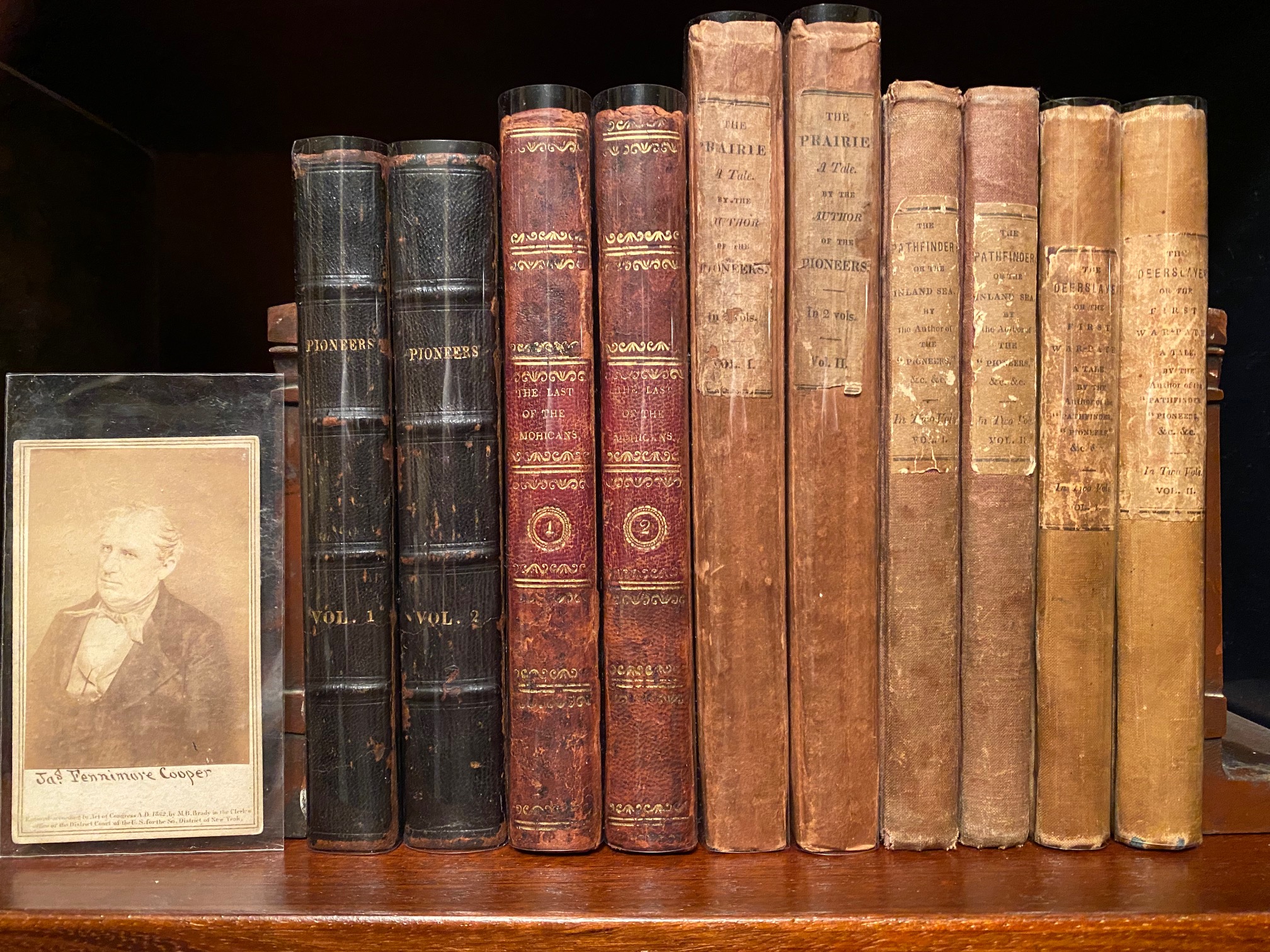
A collector assembled all five titles in James Fenimore Cooper’s Leatherstocking Tales, including The Pioneers (1823), The Last of the Mohicans (1826), The Prairie (1827), The Pathfinder (1840), and The Deerslayer (1841).  Each title appears in two volumes.  The three latest titles—The Prairie, The Pathfinder, and The Deerslayer—are bound in the publisher’s original cloth binding with paper labels to the spine.  The covers were bland, expecting the owners to rebind them to match their libraries.  The two earliest titles—The Pioneers and The Last of the Mohicans—are rebound in contemporary leather bindings.  While these leather bindings are nice, the collector would like to upgrade them to the original publisher’s binding to create a more uniform set.


19th Century Gift Books

19th Century gift books, The Mayflower (1848)

One collector has a number of 19th Century annual gift books which were produced mainly as Christmas and New Year’s gifts.  These series include such titles as The Gift, The Opal, The Mayflower, and The Token.  The collector is primarily interested in these gift books because many issues contain works by Edgar Allan Poe.  The collector focused on a couple of issues he would like to upgrade.  Some have condition problems and could be upgraded to nicer copies.  One book, in particular, is the 1848 issue of The Mayflower, which is known to be identical to the 1846 issue in both content and design; the title page of the 1848 issue still states 1846.  The collector possesses the 1848 issue but would like to acquire the true 1846 issue, also.

The Mayflower, 1848 (left) and 1846 (right)

UPDATE: Motivated by showing his copy of The Mayflower to the book group, the collector went in search of the 1846 issue.  Serendipitously, after years of watching for a copy, he located one within days of the September meeting.  Other than the year printed on the spine and the hue of the brown leather, the blind embossed designs on the covers are identical, as is the content inside the book, including Poe’s “The Imp of the Perverse.”


Theodore Dreiser

Works of Theodore Dreiser

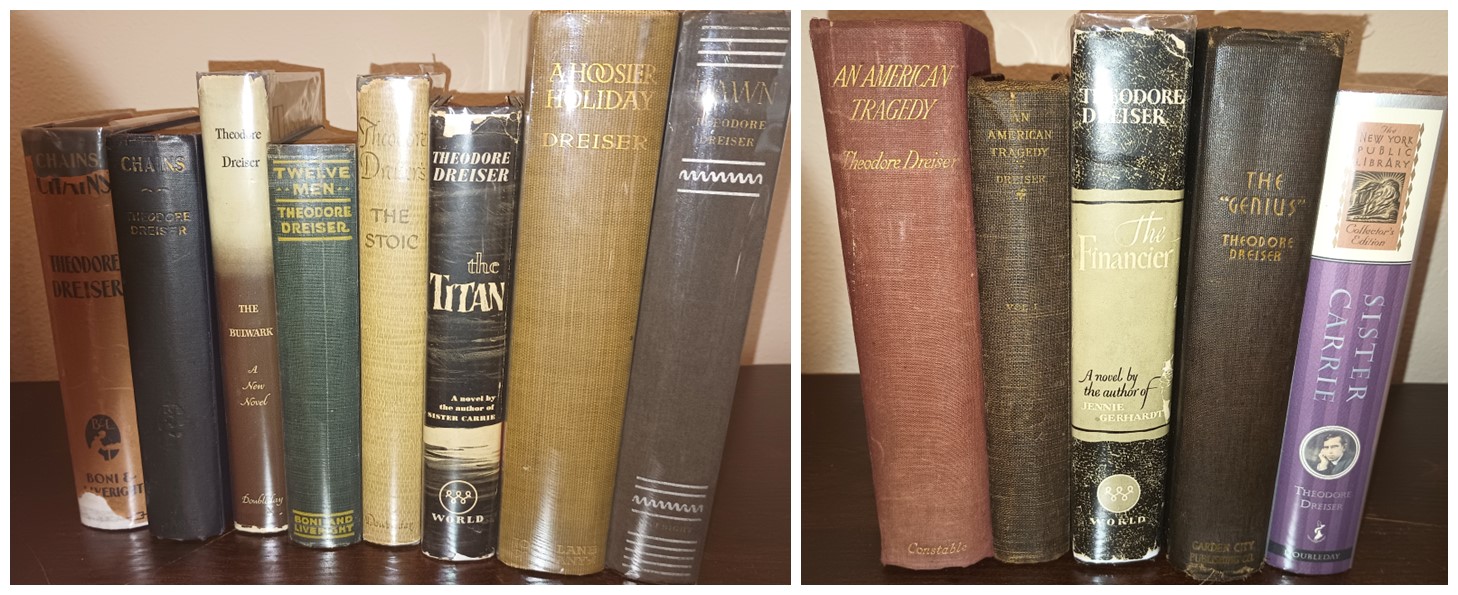
A collector shared various Theodore Dreiser fiction and nonfiction books, including his two most recognized titles, Sister Carrie and An American Tragedy.  Some copies are first editions but either lack a dust jacket or it is in only fair condition.  Other copies are reprints and, again, may lack a jacket or have one with condition issues.  The collector would like to upgrade any of these titles to nicer copies, ideally first editions with dust jackets, but such upgrades have not been a high priority in her overall collecting.  Finding first editions with dust jackets of Dreiser’s earliest novels, such as Sister Carrie and Jennie Gerhardt are particularly difficult and, when found, are expensive.


A Canticle for Liebowitz

A Canticle for Liebowitz

A collector showed a copy of Walter M. Miller’s A Canticle for Liebowitz (J. B. Lippincott Company, 1959).  The dust jacket for the book is fragile and rarely seen in fine condition.  This jacket is in good condition except for being price clipped and having a small piece cut out of the front flap.  The book looks nice on a shelf, but when opened up it is evident that it is an ex-library copy with the usual stamps and damages.  The collector would like to upgrade to a cleaner copy but notes that collectible copies range from $1,000 to as much as $12,000.

Ex-library damages

Sir Gawain and the Green Knight

Sir Gawain and the Green Knight

A collector showed two copies of Sir Gawain and the Green Knight (Oxford Press, 1955 and 1963, respectively).  The 1955 copy is the 6th impression of the 1930 “corrected” edition, and the jacketed 1963 copy is the 8th impression of the 1930 “corrected” edition.”  This annotated edition of the 14th-century long poem was first published by Clarendon Press in 1925, edited by J. R. R. Tolkien and E. V. Gordon.  The collector would like to upgrade to earlier editions, particularly the original 1925 edition and the 1930 “corrected” edition.


Graham Greene

Spine and ex-library damages

A collector of the British writer Graham Greene showed two titles he would like to upgrade.  First, he showed a copy of the English edition of The Name of Action (Heinemann, 1930).  The copy is an ex-library copy with all the usual ex-library damages, and the spine’s cover is mostly detached.  The collector would like to upgrade to a copy in better condition. 

The Name of Action with letter from Greene's secretary

Once upgraded, though, he will keep this copy because of its history.  It is accompanied by a letter from Greene’s secretary to its owner.  Apparently, the owner of the book wrote to Greene in 1967, offering to sell him this copy, knowing that the book was suppressed, never reprinted, and therefore scarce.  Greene’s secretary responds, politely declining the offer and informing him that Mr. Greene already possesses a copy.

The Basement Room

Second, the collector shared a copy of The Basement Room (Cresset Press Ltd., 1935).  This copy is a second issue of the first edition, identified by the red cloth binding.  The first issue is bound in green cloth.  Copies of the first issue are scarce but findable; upgrading this title hasn’t been a high priority for the collector.  The dust jacket for the first edition was the same for both issues, but it is very brittle and few remain.  In 2020, a first issue with a very good dust jacket sold at auction for $11,250.  The collector is pretty sure he won’t make that big of an upgrade any time soon.


The Saturday Book

The Saturday Book: Sixth Year, with damage

One collector showed a copy of The Saturday Book: Sixth Year (Hutchinson, 1946).  This copy bears an inscription on the title page by one of its contributors.  It would otherwise be a nice copy except one of the color plates was brutally removed from the book.  In the process it damaged three other leaves of color plates, leaving an open hole through the gathering.  The collector wants to upgrade to an intact copy.

Dust jacket for The Saturday Book: Year Ten

UPDATE: While showing the book, the collector admitted to being baffled as to why the dust jacked on the Year Six edition stated, “Tenth Anniversary Issue.”  Another collector subsequently combed through his set of The Saturday Book and verified that the book simply bore the wrong dust jacket.  The collector who showed the book now has two reasons to upgrade his copy!


Thursday, August 31, 2023

August 2023: Animal Stories

Animal stories captured the attention of the August 2023 meeting.  Collectors took us on a figurative safari of fiction and nonfiction works which tell stories of animals.  Fictional stories included both anthropomorphized animals as the central characters and animals in their natural state, from protagonists to villains.  The genres ranged from folklore to fantasy to horror.  Nonfiction works came from naturalists and animal welfare advocates.  The final offering is not an animal story book, but the copy itself bears a surprising provenance connecting two well-known animal story writers.


Fiction

Uncle Remus: His Songs and His Sayings

Harris, Joel Chandler.  Uncle Remus: His Songs and His Sayings.  New York: Grosset & Dunlap, 1921.  A later reprint of the new and revised edition with illustrations by Arthur Burdette Frost.  First published in book form in 1880, Harris’s Uncle Remus stories began as a column in The Atlanta Constitution newspaper beginning in 1876.  Harris penned the oral tradition animal stories he heard as a teenager from African American slaves at the Turnwold Plantation while he was working as a printer’s apprentice for The Countryman newspaper.  Through the voice of his invented Uncle Remus, Harris introduced the folklore characters Brer (Brother) or Mr. Rabbit, Mr. Fox, Miss Cow, Mr. Possum, Mr. Wolf, the Deceitful Frogs, and a menagerie of other humanized animals to new audiences.

Walt Disney's Uncle Remus Stories

Harris, Joel Chandler and Marion Palmer.  Walt Disney’s Uncle Remus Stories.  New York: Simon and Schuster, 1946.  Retold by Marion Palmer from the original "Uncle Remus" stories by Joel Chandler Harris.  Pictures by Al Dempster and Bill Justice, adapted from the characters and backgrounds created for the Walt Disney motion picture Song of the South and other Walt Disney adaptations of the original "Uncle Remus" stories.  The publication of the book coincided with the release of Song of the South in 1946.


Lobo, Rag & Vixen

Seton, Ernest Thompson.  Lobo, Rag, and Vixen and Pictures.  New York: Charles Scribner’s Sons, 1914.  The four stories contained in Lobo, Rag, and Vixen were first published in Wild Animals I Have Known in 1898.  The stories of Lobo, Redruff, Raggylug, and Vixen were extracted to their own book in 1900, with illustrations by Seton.  Seton’s fictional stories grew out of his experience as a naturalist.  The first story in the collection, "Lobo the King of Currumpaw," was based upon his experience hunting wolves in the southwestern United States.  "Lobo" set the tone for his works, depicting wild animals—even predators—as compassionate, individualistic creatures.  Seton is credited with pioneering the genre of animal fiction.

Animal Heroes and Wild Animals at Home

Seton, Ernest Thompson.  Animal Heroes: Being the Histories of a Cat, a Dog, a Pigeon, a Lynx, Two Wolves and a Reindeer.  Toronto: Morang & Company, Ltd., 1905.  Illustrated with over 200 drawings by Seton.  Eight stories of animals struggling for their existence, based on the author's detailed observations of real animals.

Seton, Ernest Thompson.  Wild Animals at Home.  Garden City, NY: Doubleday, Page & Co., 1913.  Illustrated with over 150 sketches and photographs by Seton.  A collection of stories drawn from Seton’s observations of wild animals in their natural habitats of the Rocky Mountains and Yellowstone National Park.  He regularly toured the entirety of the Rocky Mountains, from British Columbia to Mexico, over a period of thirty years, and described Yellowstone as "the great mountain haven of wild life" (Foreword).


The Call of the Wild

London, Jack.  The Call of the Wild.  New York: The Macmillan Company, 1903.  Illustrated by Philip R. Goodwin and Charles Livingston Bull.  Buck, 140-pound St. Bernard–Scotch Collie mix, is stolen from his ranch in California and sold into service as a sled dog in Alaska during the Klondike Gold Rush.  The harsh conditions in Yukon cause Buck to grow feral as he adapts to the wilderness.  After his master's death, he becomes free of humans and relies on instinct to live and become a leader of dogs in the wild.


The Red Pony

Steinbeck, John.  The Red Pony.  New York: Viking Press, 1945.  Illustrated by Wesley Dennis.  The Red Pony was first published in magazines from 1933 to 1936.  The complete story was published in 1937 by Covici Friede in paperback.  Viking published this slip-cased hardcover in 1945.  The four episodic stories in the book are tales of a young boy named Jody Tiflin and his life on his father's ranch in California.  The novella was adapted for film and released by Republic Pictures in 1949, starring Myrna Loy and Robert Mitchum.  An updated version was made for television in 1973, starring Henry Fonda and Maureen O'Hara.


Animal Farm

Orwell, George.  Animal Farm.  New York: Harcourt, Brace and Company, 1946.  An allegorical animal tale in which a group of farm animals rebel against their human farmer, seeking to create a society where animals are free and equal.  The rebellion collapses under the dictatorship of a pig, and the farm devolves to a state worse than before the animals rose up.

Animal Farm

Orwell, George.  Animal Farm.  London: Folio Society, 2000.  Illustrated by Quentin Blake.  In the Preface to the 1947 Ukrainian edition of the book, Orwell described his inspiration for the story's setting:

I saw a little boy, perhaps ten years old, driving a huge carthorse along a narrow path, whipping it whenever it tried to turn. It struck me that if only such animals became aware of their strength we should have no power over them, and that men exploit animals in much the same way as the rich exploit the proletariat.


Watership Down

Adams, Richard.  Watership Down.  New York: Macmillan Publishing Co., 1973.  An epic tale of a drove of rabbits who must escape the destruction of their warren and seek a new home, encountering danger and temptation along the way.  The rabbits ultimately establish a new warren on the hill of Watership Down.  Adams originally improvised the stories of the rabbits for his daughters during long car trips.  They insisted he write them down, which he did in the evenings over the course of a year and a half.  The book is dedicated to his daughters, Juliet and Rosamund.


Jaws

Benchley, Peter.  Jaws.  Irvine, CA: Suntup Editions, 2022.  Jaws was first published in 1974.  This large hardcover format with a slipcase is limited to 1,000 copies and is illustrated and signed by John Anthony Di Giovanni.  It contains a new introduction by Wendy Benchley, the wife of the author, and additional content from the Peter Benchley archives.  Jaws tells the story of a large great white shark which preys upon a Long Island resort town and the three men who attempt to kill it.  The story was adapted to film in 1975.


Alligator

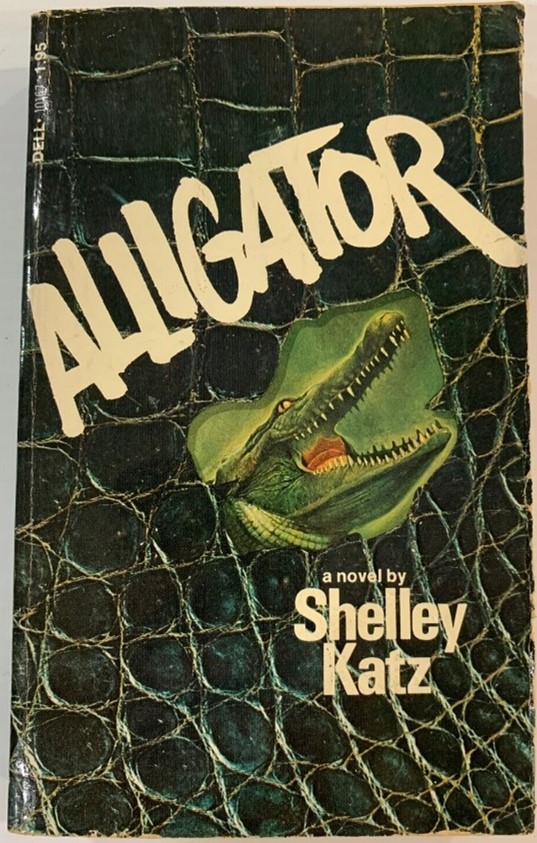
Katz, Shelley.  Alligator.  New York: Dell, 1977.  Alligator is a Jaws clone featuring a 20-foot-long killer alligator terrorizing the Everglades and the two men who are determined to kill it.  This first edition was published in paperback by Dell in 1977.  David Foster Wallace, author of the classic novel Infinite Jest, selected Alligator for his list of the ten best American novels ever written.

Alligator

Katz, Shelley.  Alligator.  Lakewood, CA: Centipede Press, 2022.  Signed limited edition of 500 copies.  Dustjacket art by Ruth Sanderson, interior art by Bo Myles, and calligraphy by Gavin Lees.


Boxen: The Imaginary World of the Young C. S. Lewis

Lewis, C. S.  Boxen: The Imaginary World of the Young C. S. Lewis.  New York: Harcourt, Brace, Jovanovich, 1985.  A posthumously published collection of stories Lewis wrote as a child about a fictional world he called Animal-Land, inspired by Beatrix Potter's animal stories.  Lewis wrote the stories during an influenza quarantine, while his brother Warren wrote stories about exotic India.  The boys brought their respective stories together to create the world of Boxen.


Roverandom

Tolkien, J. R. R.  Roverandom.  Boston: Houghton Mifflin Co., 1998.  Edited by Christina Scull and Wayne G. Hammond.  Roverandom originated as an improvised story Tolkien made up in 1925 to console his son, Michael, who lost his toy dog on a beach.  In Tolkien's story, Rover is a real dog which is magically transformed into a toy dog.  Rover must seek out the wizard who changed him in order to be returned to his true form.


The Council of Animals

McDonell, Nick.  The Council of Animals.  New York: Henry Holt and Company, 2021.  The few humans who survived "The Calamity" struggle to survive.  The animals—including a dog, a cat, a horse, a baboon, a bear, and a crow—now convene to decide the fate of the remaining humans.  Should they help them or eat them?


Nonfiction

Hunter's Choice

Rutledge, Archibald.  Hunter's Choice.  West Hartford, VT: The Countryman Press, 1946.  Illustrated by Paul Bransom.  Limited edition of 475 numbered copies signed by the author and artist.  Rutledge was a naturalist and sportsman who described hunting as an integral part of his life from an early age.  Hunter's Choice contains anecdotes and reminiscences ranging from how to train startling dogs for bird hunting to how he coaxed a buck past the stand of a lady hunter while leading a deer drive.


Animal Tracks

Murie, Olaus.  Animal Tracks.  Norwalk, CT: Easton Press, 1985.  Part of the Easton Press 50th Anniversary edition of Roger Tory Peterson Field Guides, based on Murie's updated second edition including photographs and line drawings of animal tracks and signs (think poop).  A Field Guide to Animal Tracks was first published in 1954 as part of The Peterson Field Guide Series.  The volume includes natural history stories and descriptions of the habitats, tracks, signs, habits, and ranges of all the mammals of North America.


The Bedside Book of Birds and The Bedside Book of Beasts

Gibson, Graeme.  The Bedside Book of Birds: An Avian Miscellany.  New York: Doubleday, 2005.  Gibson, an avid birdwatcher, explores the relationship between humans and birds through a collection of excerpts from a variety of writings including mythology and folklore, religion and philosophy, science, travel writing, and classic literature. 

Gibson, Graeme.  The Bedside Book of Beasts: A Wildlife Miscellany.  New York: Doubleday, 2009.  In a companion to The Bedside Book of Birds, Gibson explores the relationship between predators and their prey.  Gibson curates texts and images from mythical Minotaurs and Leviathans to real-life big cats and tiny praying mantises to illustrate the complex connection between the hunter and the hunted.


Mark Twain's Book of Animals

Twain, Mark.  Mark Twain's Book of Animals.  Berkeley, CA: University of California Press, 2009.  Edited with introduction, afterword, and notes by Shelley Fisher Fishkin.  Illustrated by Barry Moser.  This volume is a collection of stories excerpted from Twain's works, including familiar titles as well as previously unpublished drafts.  Fishkin selects stories which show how integral animals were to Twain's stories, such as Jim Smiley's celebrated jumping frog, Fitz Smythe's horse, a letter from a dog to another dog explaining humans, and a phenomenal flea.


Tangent

The Lost Childhood

Greene, Graham.  The Lost Childhood and Other Essays.  London: Eyre & Spottiswoode, 1951.  This copy of Greene’s collection of literary criticism essays comes from the personal library of Richard Adams and bears his bookplate and ownership signature.  The book appears unread except for the essay on Beatrix Potter, where Adams has written notes in the margins.  Adams pushes back on an assertion Greene makes about Peter Rabbit, and even quotes Potter directly in defense of Peter Rabbit. 

"Beatrix Potter" with annotations by Richard Adams

The Lost Childhood was published in 1951, and Adams’s Watership Down was published in 1972 (see above).  While Adams’s penciled comments are not dated, it is fun to wonder if Adams entered into this conversation with Greene and Potter prior to, or possibly while, writing Watership Down, and whether or not it played any role in writing his novel about rabbits.  This copy is fascinating in that you see a writer about rabbits interacting with another rabbit writer.  It is clear from his comments that Adams is well versed in Beatrix Potter’s animal stories, and it is intriguing to speculate on the influence Potter may have had on Watership Down.


July 2025: US Presidents

One member's unintentionally assembled collection of signed presidential books Getting an early start on the Fourth of July festivitie...